Record stores, shop owners and music lovers across the globe are experiencing a resurgence prompted by younger collectors, nostalgia and a will to keep physical music alive
It is not a Saturday like any other. April 18th is this year’s Record Store Day, an event that brings the vinyl industry to life and a polite reminder that music is not a luxury, but rather a necessity to navigate through day-to-day life for many people. In Marilians Records, a small vinyl store that is making a name for itself in the heart of Madrid, the stacks are full, the scent is unequivocal and the atmosphere feels different to a conventional day. Customers are eager to see what the store has to offer, and relieved to find out they are not alone in their freakish passion for music. You can almost feel the music as soon as you enter the place, your senses coming to terms with an experience that is better enjoyed when there is a self-consciousness to it, almost like a religious ritual one tries not to get away from.
That probably has to do with Boys Don’t Cry by The Cure being played on the speakers, but nothing should be taken away from the shop’s setting itself. The Cure’s very own Greatest Hits is one of the albums that the store is selling to mark this special occasion, on the one-copy-per-person condition, a policy that proves how seriously Marilians Records takes running its business.
Rest assured: no boys —or girls, for the matter— are crying in the shop’s surroundings on this sunny afternoon. It is all smiles, as spring makes its way into the Spanish capital. People breathing it all in and living in the moment, a rare sight to sit back and behold. For a few hours, enjoyment comes first. Personal problems seem less important. Nothing else matters.
As Robert Smith’s lyrics suggest, taking something for granted is rarely a good choice. This includes the vinyl industry, a sector that was gravely affected when digital streaming platforms first came into play. Essentially, this led to a shift in the way music was perceived, especially among younger generations, who grew up learning about artists in a different, arguably more superficial way. After all, who would go through the hassle of learning how vinyls function when they can press a simple play button? And albums splitting in two, what is all that about? Sorcery, they must think. This phenomenon has exacerbated in a context where time is the most precious and valuable asset, with full-on albums becoming secondary to songs.
However, workers in the music sector have always managed to survive and reinvent themselves in this fast-paced society. “Like in every sector, the speed at which everything changes is a major challenge. You have to adapt almost daily in order not to become obsolete”, says Daniel Forés, co-founder and co-owner of Marilians Records. However, they have found a place to flourish, attracting younger clientele and reigniting a deeper, more complex understanding of music. A vinyl revival, even. “Although vinyl as a format never disappeared and people continued collecting records, in recent years there has definitely been a resurgence”, Mr. Forés argues. “Most bands now release their music on vinyl. This has led to more and more people wanting to own their favorite artist’s record at home”, he adds.
“These are spaces where people spend an entire morning listening to and searching for new music. You can share the experience, socialize, and meet people with the same interests”.
Reflecting on his shop’s type of clientele, one of the store’s two owners explains that 90% of people who come into his shop are between the ages of 18 and 30. “Marilians Records is geared towards new releases, we give a lot of support to emerging artists. Younger people that consume physical music are buying vinyl because there is a very interesting music scene in Madrid and Spain, with newer bands doing things very impressively”, he continues.
Younger people, fueled by a romanticization of the past and a desire to feel a stronger engagement with music, are beginning to appreciate vinyl not only as a form of music, but also as a valuable collector’s item. “Our younger clients are just starting their collections, and they come here every week looking for new releases and recommendations”, Mr. Forés remarks. “Nowadays, people can listen to an album on streaming platforms, even if they tend to listen to isolated tracks through these means, and then come to buy it on vinyl”, he carries on. “But the fact is”, he adds, “some bands release their albums digitally and, if it has a degree of success in terms of streams, they manufacture a vinyl version”.
Mr. Forés hopes the cultural role of record stores always remains. “These are spaces where people spend an entire morning listening to and searching for new music. You can share the experience, socialize, and meet people with the same interests”. Ultimately, this is what it is all about: connecting through music and taking some weight off the burdens of life.

What Does the Data Say?
Vinyl is the original form of listening to music. Back in the day, when music was only appearing as a social phenomena, people resorted to record-players out of necessity. That changed over time, with the emergence of CDs and later on streaming platforms like Spotify, which currently stands at 761 million users. Nowadays, most music is consumed through these platforms, but in recent times, vinyl has experienced an unexpected rise. According to Promusicae, an association that represents more than 90% of Spanish recorded music sector’s national and international activity, consumers’ preferences for vinyl have risen almost 26%, translating into 13.6 million euros. 54% of physical albums which are sold are vinyls, surpassing CDs for the first time since 1991. Vinyl has become not only a form of listening to music, but also a collector’s item.
The UK’s Digital Entertainment and Retail Association (ERA) reports similar statistics in the country, with the vinyl market growing by 10.5% last year. On this point, the BBC wrote that 6.7 million records were sold in Britain and Northern Ireland in the past 12 months, generating 196 million pounds. There is arguably not a bigger testament to vinyl’s resurgence of popularity in the UK than the Office of National Statistics (ONS) including it among the 744 items used to calculate inflation each month.
Resurrection is a strong word, albeit one Ian Brown used to draw a close on The Stone Roses’ self-titled debut album, released in 1989. Nearly four decades later, the term has become particularly significant – and not only amongst the younger generations.
Nick Watkinson is 52, but he only started buying vinyls a decade ago. When he started to first purchase music, it was mainly CDs for him. “Vinyl was on the decline in the late 80s to 90s”, he explains, “so I went straight to CD consumption and then into streaming platforms”. Born and raised in Liverpool, a musical haven, he moved to Spain in the mid-90s. It was not until two decades later, though, that he started to take into consideration starting a vinyl collection. “I thought it would have to be nice to play some music on vinyl because there is something a bit special about the whole process”, he confesses. “But I did not want to just buy anything on vinyl for the sake of it. I wanted to have specific records that I thought would sound special on vinyl, mainly records from the 60s, 70s and early 80s”, he admits.
And so it began. A collection that includes the likes of Led Zeppelin, Pink Floyd or The Beatles. “It might sound a bit cliché, but the sound of a proper vinyl, recorded analogically and not digitally, has something special about it”. For Mr. Watkinson, it’s the packaging, covers, sleeves, sleeve notes and lyrics: “It’s something physically tangible that you could never get with a streaming platform”.
Duncan McBain, aged 68, is another music geek. He loves going into record shops or fairs and flicking through looking for long-lost treasures. He reckons it does not feel the same with CDs, and most definitely not online, where that physical sensation is non-existent. He also talks about nostalgia. “As a teen, I enjoyed going into record shops. I remember when I was 14, I would work all day fruit-picking, earn 2 pounds and then cycle back into town before the shops closed to buy myself an album”, he recalls. “A new album at the time cost 1.99. So even then I had a penny left over”, he jokes.
Mr. McBain has only just changed from side A to side B of a record. “I think there’s almost a ritual for us old fogies of turning the record and placing the stylus on the record”, he says. A classic example of vinyl mentality: side A versus side B. Strangeways, Here We Come, the last studio album released by The Smiths, is the example he provides. “Side A of Strangeways is absolute perfection”. It is hard to argue with him, with side A including Girlfriend in a Coma and Stop Me If You Think You’ve Heard This One Before. “We used to talk about that a lot with regards to classic albums. It can’t exist with other formats”, he adds.
“There’s a market for my generation, who have seen it go out of fashion and come back in, and the younger generation, who are just getting into the fact of vinyls being cool”.
For Mr. Watkinson, vinyls are not mere collector’s objects. “I listen to all of the vinyls I have. I don’t store them in plastic wallets just to keep them in pristine condition, with the hope that they’ll be valuable one day”, he argues. He doesn’t want to have vinyls in a box or on a stand just to shut off. He wants to listen to the piece of art, play it in its original context. “For me, it’s first and foremost something to listen to”. He admits it’s also nice to think he’s got a nice edition of an album from when it was originally made. “But not because of its economic value. Because it’s a bit of cultural history”, he emphasizes.
“The sound quality”, he carries on, “is paramount: if it doesn’t sound any good, then I’m not going to play it much. Albums with posters or extras inside are nice to have but that, to me, is maybe not the most important thing of all. Is it something that I would consider one of my must-haves and is it something that sounds better on vinyl because of when it was first recorded? If the answer is yes then generally I’ll buy it on vinyl. It’s just nice to have a nice edition of an album that you really want to have to listen to”.
Mr. McBain agrees with him, and takes it a step further. “All the time” is his answer when asked how frequently he plays his vinyls. “If I’m home there’s an album on”. To the surprise of nobody, that is, given he has two record players: one in his living room and another one in his bedroom. “I can easily listen to four or five albums a day”. He definitely considers vinyl a listening format. “I want to listen to the music. I don’t care if it’s a first edition, or on a particular label”, he clarifies, while adding that the exciting new discoveries he made during his teen years have stayed with him for the rest of his life.
Funnily, Mr. McBain is proper old school. He used Spotify for a very short period of time, but then gave up on it. “I never use streaming services now. Since I went back to my vinyl and CDs, I don’t bother with it at all”. A mix of disinterest and lack of authenticity, he also recognizes that his musician friends complain about streaming services because they get a small percentage of income from it compared to hard copies.
Reflecting on the impact vinyl is having on younger people, he finds this trend surprising. “A lot of people in their late teens and early twenties probably rarely saw vinyl when they were kids. “I remember when my daughter’s friends came over and they used to make comments like these are strange books on seeing the vinyl”. So for a lot of young people, he explains, “vinyl is something new”. However, he reckons it’s very much a cult thing and he doesn’t believe it will get much bigger.
“I don’t know to what extent young people today have the patience and attention span to listen to whole albums”. He’s unsuccessfully trying not to sound like a grumpy old man. “I was talking to a record shop owner recently who said he thought CDs might make a similar comeback soon simply because the price of vinyl has gone through the roof and people are prepared to pay those prices for a record that they really love, but not to the point where they can build a genuine collection”.
Amusingly, Mr. Watkinson has already made this his prediction. “At the moment it would appear that the market is strong as people are going back to the good old days of vinyl. If record companies are still making money, then vinyl will still be for sale. But maybe it will die a death and become less popular again because something else replaces it”, is his exact wording. “Maybe cassettes will come back in five years time and everyone wants to buy cassettes again and vinyls take a hit. You never know, but I think it will stay this way in the short-term because there’s a market for my generation, who have seen it go out of fashion and come back in, and the younger generation, who are just getting into the fact of vinyls being cool”.
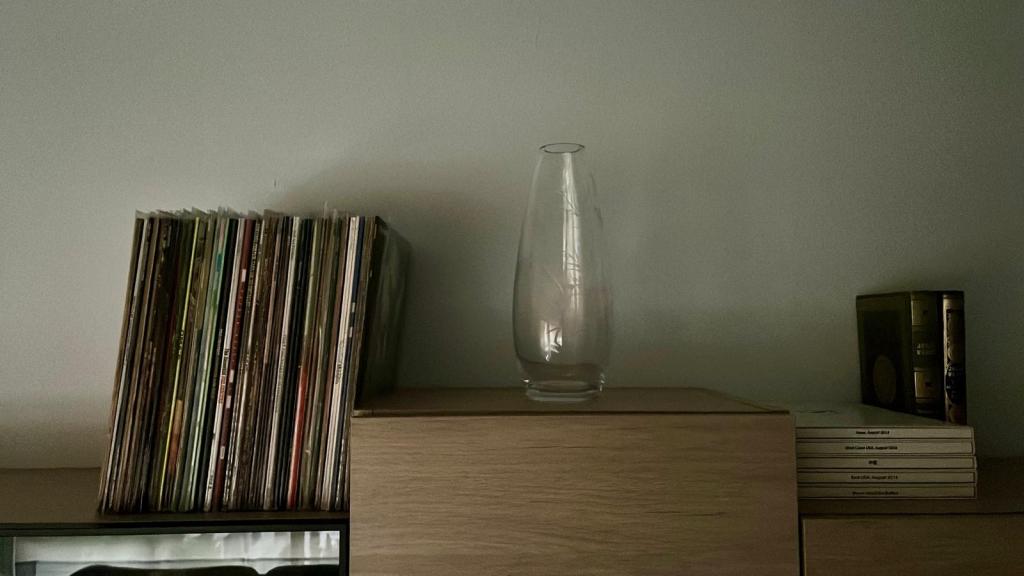
Mr. Watkinson sees a lot more younger people buying vinyls than two decades ago, when it seemed to have fizzled out. “Maybe it’s fashionable again and at the end of the day any type of consumption is a cyclical thing, as much as that it comes and goes. I don’t know why they all of a sudden want to buy vinyl as opposed to just listening to Spotify or Apple Music. Maybe they want something physical because they want to look trendy, maybe it’s because they want to post a photo of it on Instagram”.
While the present of vinyl is safe, the future is a different and more complex question. “I don’t think it will get much bigger unless prices go down”, Mr. McBain argues. “After all, 30 euros is the price of a decent meal”. His final point, however, stands out. “A meal, mind you, lasts two hours, while a record is for life”.
How Are Things Looking in Niche Record Shops?
In Liquidator Music, a small record store in Madrid that opened in 1997 and only sells Jamaican music, there is also a new audience discovering ska, reggae and soul through vinyl. “In our case, since we specialize in a specific style of music, this resurgence is noticeable on a smaller scale, but it definitely gives the impression that there has been a revival”, Antonio Fraguas, the store’s owner, tells me.
Mr. Fraguas goes by the name Toni Face, and assures me that this spike in vinyl sales has not been enough to turn this into a prosperous business. “We still survive through a great deal of effort”. The shop owner, one of the most influential figures in Spain for music of Jamaican origin, hopes that the resurgence of vinyl is not just a passing trend, and that people once again give music the importance it deserves.
A few kilometres to the northeast of Spain, in Barcelona, Disco 100 stands tall as one of the country’s finest record stores. Founded in 1978, it is widely considered Spain’s biggest first hand record store, with a catalogue of more than 117.000 references, a sum that also includes CDs.
Dan Mayor, son of the store’s owners, is now a worker who has assumed a larger chunk of responsibility. Throughout the half hour we’re on the phone, one thing is evident: it is safe to say his love for music and knowledge of it is second to none. His parents, who founded the store nearly 50 years ago, have passed it onto safe hands.
I start my call asking for three album recommendations, and by the end of a long thought process, he is already regretting his decision. Don’t ask a woman her age, don’t ask a man his salary, and most definitely do NOT ask a music expert his favorite album. He might braincrash. His initial pick is Julian ‘Cannonball’ Adderley’s 1958 Something Else, which he describes as an introduction to jazz. An album that features Miles Davis on the trumpet and Art Blakey on the drums. In the rock world, he tries to perform the same exercise. “Santana’s debut album, aside from having a marvellous cover, is a phenomenal record”. Mr. Mayor also recommends the first two albums by Crosby, Stills and Nash, the first supergroup to emerge in the late 60s.
I ask him if those four albums are part of his catalogue. They are.
“Since 2020-2022, the public has become less masculine and a lot more juvenile. There have been lots of instances where the Christmas present for younger people, maybe in the bracket of 15-25 years of age, has been a vinyl record”.
As Mr. Mayor talks me through Disco 100’s history, he explains that between 2000 and 2007 no vinyls were sold in the shop. “From 2007 onwards, there began to be a demand for vinyl. We started putting vinyls on sale again, more or less up to now, when we have around 15 to 20.000 different vinyls in stock”.
As a worker in the industry, he expresses the same concern Mr. McBain did earlier. “Vinyls are getting too expensive now”. That’s why Disco 100 works a step ahead and still offers a massive catalogue of CDs. “We must have more than 80.000”, Mr. Mayor tells me. “We sell around four CDs for every vinyl”. His impression is that only in periods like Christmas or during Record Store Day does that difference reduce.
Mr. Mayor explains how, in the mid to late 80s, CDs used to come with a side note that included the following message: “We apologize for being unable to faithfully reproduce the full sound quality of a vinyl record”. In the words of the store owner, CD sound can be very good, but it is only an approximation of something analogical. Additionally, Mr. Mayor argues that most people don’t have the required equipment to be able to listen to music in a way that makes the most of the sound. “Most people cannot afford to buy a number of apparatus that, in truth, are ridiculously expensive”.
With regards to the type of clientele that comes into his shop, he acknowledges that things have changed. “When I was younger, we didn’t sell vinyl, and the ones we sold were to very specific people looking for a very specific type of music”. These customers, he recalls, were mostly men between the ages of 30 and 60. The turning point for him was the pandemic.
“Since 2020-2022, the public has become less masculine and a lot more juvenile”, he describes. “There have been lots of instances where the Christmas present for younger people, maybe in the bracket of 15-25 years of age, has been a vinyl record”.
Reflecting on the changes he would make to the industry, Mr. Mayor shows dislike at the concept of exclusiveness. “If a vinyl is sold through shops, then why is it available in some stores and not in others?”, he asks. I can thank the fact it was a rhetorical question, because I don’t have an answer to console him. “I also think certain artists take advantage of people’s desire to collect by releasing the same album plus a bonus track”. He considers that a joke. “These are things I would love to change, but I’m not sure how much it depends on me”, he finalizes.
Across The Universe…
Words are flowing out like endless rain into a paper cup. They slither wildly as they slip away across the universe. And across the pond we move to the United States, where vinyl sales have outpaced those of CDs for the first time since 1987.
The Recording Industry Association of America (RIAA) states 44 million vinyl LPs were sold in the United States in 2024, a 40-year high which translated into 1.4 billion dollars for the music industry. More remarkably, of the revenue accrued by physical purchases, roughly 70% belongs to vinyl sales. And this doesn’t include second-hand sales.

“In the years ahead, vinyl will likely maintain its status as a complement to the impersonality of streaming, a scruffy anachronism consistently hanging out at the margins”, Pitchfork reported. All of this after the magazine, one of the most influential in the musical landscape since it was founded in 1996 in Minneapolis, informed nearly a decade ago that vinyl sales in the US had risen for the 12th straight year.
In this context, Amoeba Records is the largest independent record store in the world. It has become a must-visit destination for lots of music lovers thanks to its enormous inventory of vinyls, CDs and films. The store also hosts live performances, in a bid to attract more clientele.
Jim Henderson introduced us to his shop’s dynamic. When asked about the current role of record stores, he replies with a single word: “outsized”. According to him, record stores are still massively important to an artist’s hold on a populace. “Amoeba is, in fact, a regular part of artists’ album launches, be it through a performance in the store around release date, or a meet-and-greet event to raise the profile of the release”, he highlights.
If he was the music czar, he would definitely regulate pricing and quality control. He thinks keeping pricing in the grasp of younger people to encourage growing collections and discovery is really important. So is, for him, scaling back the proliferation of multiple deluxe editions of a single album re-released several times. Doing otherwise, he says, “is an exploitative practice”.
Mr. Henderson argues that there isn’t a ‘type’ of person that buys vinyls, given everyone does these days. “It’s a popular commodity and, like other such items, the interest and audience is broad”. He does admit, however, that after the COVID pandemic he saw a renewed interest amongst younger folks, and that has only deepened in the ensuing years. “This resurgence of vinyl has been playing out steadily over the past nearly decade, so it’s hard to qualify it as a trend anymore”, he says.
Vinyl’s revival has certainly helped not only established record stores, but has also led to many more independent record stores opening around the world. The experience these cultural havens have created for customers around the globe has allowed them to stay alive when predictions pointed in the opposite direction. Through determination and hard work, record stores have remained successful regardless of the trending formats, a message that should stay present moving forward, exactly the way it has done so in the darker days.
In the end, the love you take is equal to the love you make. John Lennon very rarely got it wrong, and this time is no different: the love all of these people have taken from music has been equal to the love they’ve given music back. The future is safe while this premise remains unchanged.


Leave a Reply